I used to think I was good at prompting.
Back in 2025, I'd sit there creating the perfect message. Four paragraphs of context. Specific instructions. Examples. I was proud of my "prompt engineering" skills.
And honestly? It worked. Most of the time.
But something shifted this year. The tools got smarter. More capable. And suddenly, my careful prompts felt... small.
I realized I was still thinking like a user. Not like someone actually building something.
The Moment It Clicked
It happened in February.
I was building a simple internal tool. Started with one prompt. Got a good response. Then another prompt. Then another.
Before I knew it, I had 47 separate chat threads open. Each one doing its own thing. No coordination. No memory of what the others were doing.
I was like a person trying to conduct an orchestra by sending individual text messages to each musician.
One musician plays beautifully. But they're all playing different songs.
That's when I realized: I wasn't orchestrating. I was just chatting.
What I Do Now Instead
I completely changed my workflow. Here's what it looks like today:
Step 1: I design the system first, not the code.
Before I type a single prompt, I map out the whole thing. Who needs what. When. How pieces connect. I draw it on a whiteboard. I use sticky notes. I talk to myself like a crazy person.
Only then do I involve AI.
Step 2: I assign roles, not tasks.
I don't say: "Write me a login function."
I say: "You're the authentication specialist. Here's our security policy. Here's our user data structure. Your job is to handle everything related to login, registration, and password reset. Coordinate with the database specialist when you need schema changes."
I'm giving each AI agent a job title and a scope. Just like I'd do with human teammates.
Step 3: I make them talk to each other.
This is the part that blew my mind.
I set up a system where the "frontend" AI writes the interface, the "backend" AI writes the API, and the "testing" AI writes the tests. But here's the twist: they all review each other's work.
The testing AI won't approve anything until it passes its checks. The backend AI complains if the frontend asks for data in a weird format.
It's messy. It's chaotic. And it catches problems I never would have caught alone.
The Hardest Part
Honestly? It's mentally exhausting.
When I was just prompting, I could half-watch Netflix while doing it. Now I have to stay sharp. I'm managing multiple "people" (okay, AIs) who are all working at the same time.
I have to track what each one is doing.
My brain is tired at the end of the day. Real tired.
But the work that gets done? It's so much better.
What I Think Is Coming
I believe we're heading toward a world where we don't write anything at all.
Not prompts. Not code. We just set up systems. We define outcomes. We establish rules and boundaries.
And then we let the AIs figure out the rest.
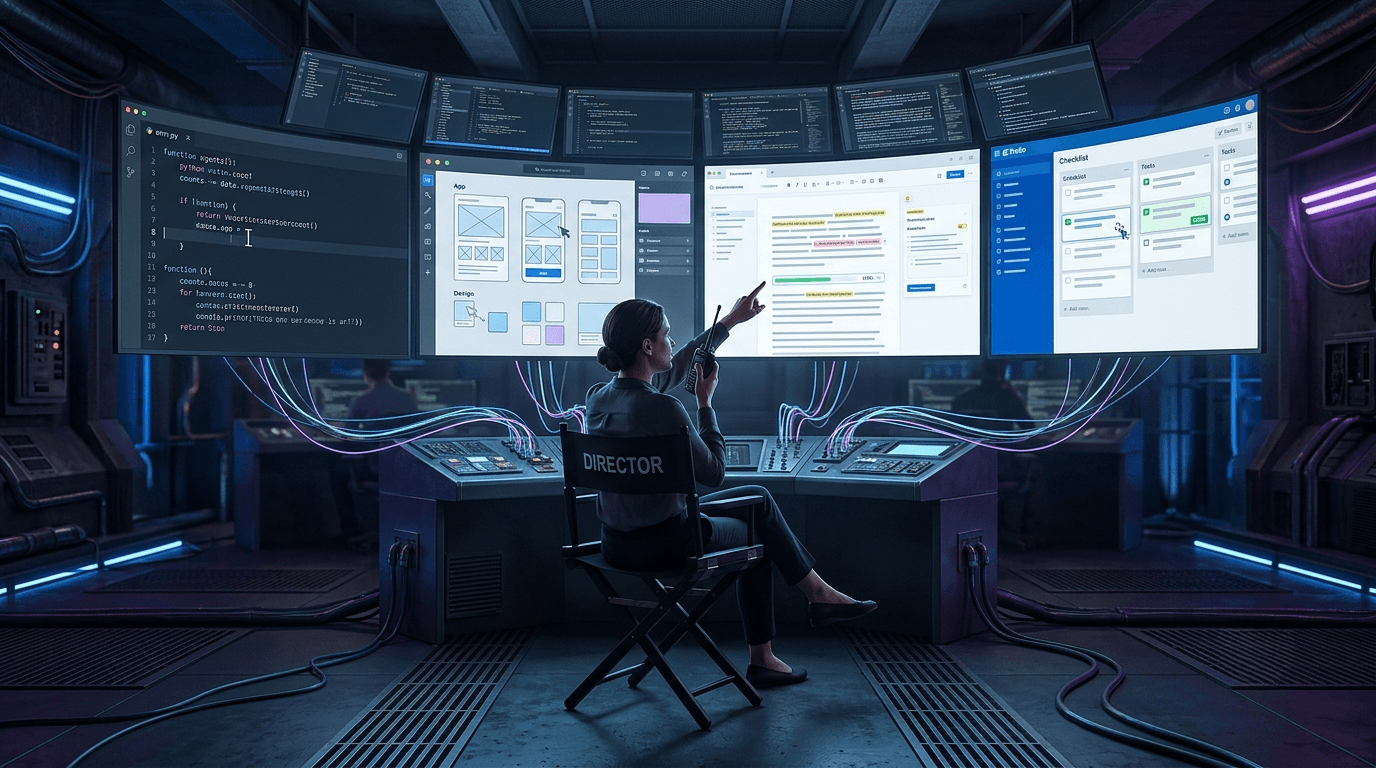
It's like being a movie director instead of a scriptwriter. You don't write every line of dialogue. You cast the right people, give them the vision, and trust them to bring it to life.
My job in 2027? I think it'll be less about talking and more about listening. Listening to what the AIs are telling me about my own requirements. Listening to where they get stuck. Listening to what they argue about.
Because the arguing? That's where the real insights live.
When two AIs disagree about how to build something, it's almost always because my instructions were unclear. They're fighting over gaps I left open.
I've started treating these arguments as feedback on my own thinking. And honestly? It's made me a better planner.
One Simple Shift That Changed Everything
Here's the one thing I did that made the biggest difference:
I stopped thinking about what I wanted the AI to write. I started thinking about what I wanted the AI to own.
Ownership changes everything.
When I own a feature, I care about it long-term. I think about how it'll break six months from now. I think about how it fits with everything else.
When I just write code, I stop caring the moment it works.
Now I assign ownership to different AI agents. And weirdly, it works. They don't care (obviously—they're software). But the structure forces me to think about maintenance, integration, and edge cases from day one.
It's not magic. It's just a better way to organize my own brain.
The Simple Truth
Prompts are conversations. Orchestration is leadership.
Anyone can have a conversation with AI. But leading a team of AIs—that's a different skillset entirely.
It's less about crafting perfect words and more about designing clear systems. Less about being clever and more about being clear. Less about controlling every detail and more about trusting the process.
I'm still learning. I mess up almost every day. But I'm getting better.
And honestly? I like this version of my job way more than I ever liked writing prompts.
Just one person trying to figure out this new world. Still messing up. Still learning. But finally feeling like I'm actually building something.